
Feed Mixers — Fast, Uniform Mixing for Poultry, Livestock & Aquafeed Lines
Our horizontal ribbon and paddle feed mixers deliver uniformity CV ≤5% in 3–5 minutes per batch. From small farms to complete feed mills, we match mixer type, batch size and power to your line capacity, formulas and upgrade plan.
Why BIG WIN Feed Mixers
Engineered for fast, gentle and uniform mixing in pellet lines, premix plants and on-farm systems.
Optimized ribbon / paddle geometry and filling rate deliver tight CV even with micro-ingredients.
Choose compact single-shaft mixers or high-intensity double-shaft for demanding premix work.
Large contact area and low tip speed avoid segregation and damage to fat-coated or fragile pellets.
Pneumatic, manual or slide gates with full-width discharge and optional load cells for batching.
Smooth internal surfaces, end doors and optional flushing reduce cross-contamination between formulas.
PLC control for ingredient dosing, mixing time, gate control and integration with your existing SCADA.
Feed Mixer Product Line
Horizontal ribbon and paddle mixers for batch sizes from small farm to full feed mill.
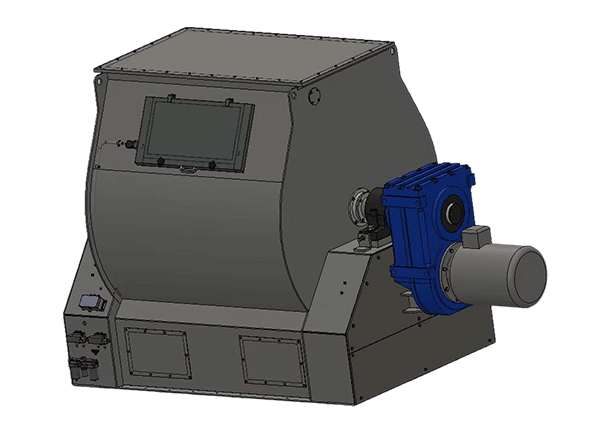
HHDJ-4 Feed Mixer
Large-capacity paddle mixer for complete feed mills. Typical batch volume: [2,000–4,000 kg]; mixing time: 3–5 min; suitable for poultry, livestock and premix with high precision.
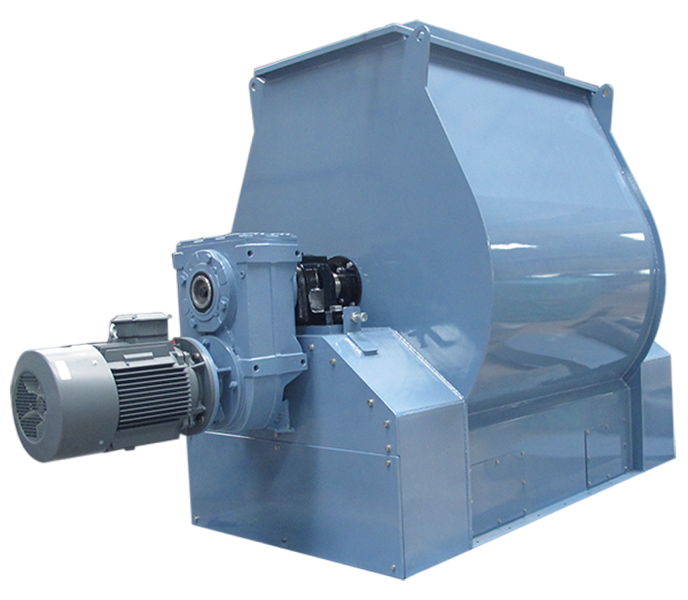 SGDJ Series Single Shaft Paddle Efficient Mixer
High-efficiency single shaft paddle mixer. Typical batch volume: [1,000–3,000 kg]; CV≤5%; ideal for mainstream poultry and livestock feed plants seeking throughput and flexibility.
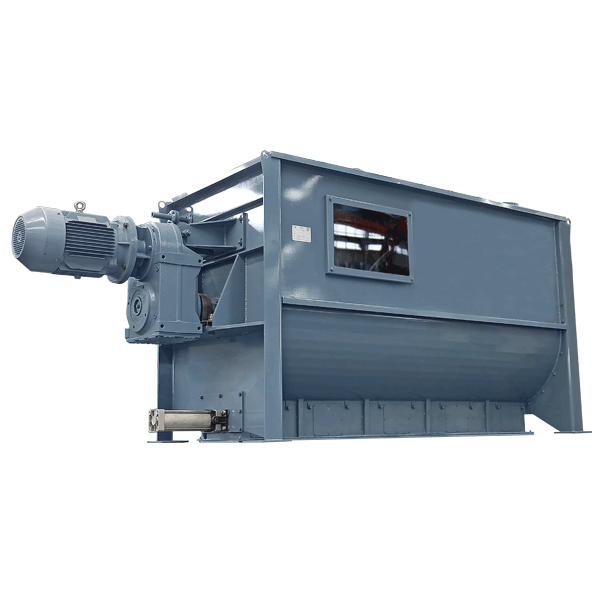 SLJH Series Ribbon Paddle High Efficiency Mixer
Compact ribbon–paddle mixer for 250–1,000 kg batches. Widely used as the main mixer for 0.5–3 t/h lines and as a secondary mixer in larger plants.
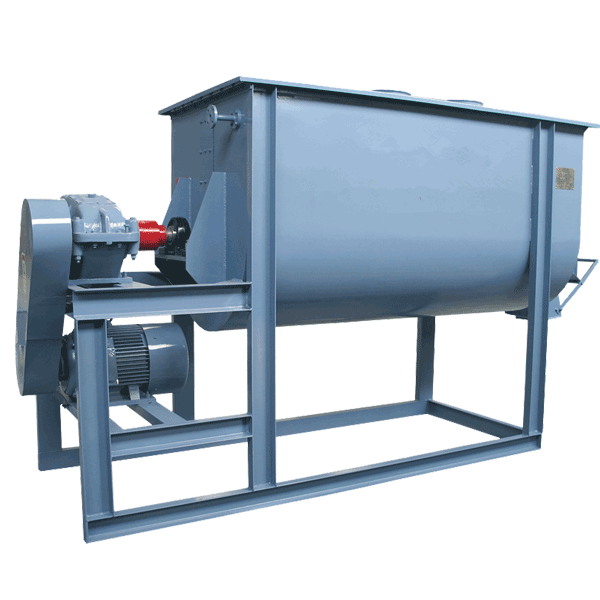 9HWP Series Feed Mixer
Economical mixer for small farms, test lines or micro-batches. Typical batch volume: [100–500 kg]; easy installation and low power consumption.
Feed Mixer Selection & Price Estimator
Enter line capacity, batch size and mixing time to estimate mixer model, batch volume, power and price band for your mixing section.
Mixer Comparison & Selection Guide
Compare our mixer series and follow this guide to choose the right mixer for your line.
Decide required throughput (t/h) and preferred batch size. 0.5–3 t/h lines: SLJH / SGDJ; 3–8 t/h: SGDJ or HHDJ-4; farms and small lines: 9HWP.
Poultry / livestock: standard CV≤7% is usually enough. Premix, aquafeed and pet: target CV≤5% and consider higher-intensity paddle mixers.
Ribbon: economical, gentle, longer mixing time. Paddle: faster, better liquid distribution. Double-shaft: highest intensity and shortest mixing time.
Run the estimator for a quick recommendation, then share your formula and existing equipment. We’ll check filling factor, CV and power and send a firm proposal.
Key Mixer Comparison
| Feature | HHDJ-4 Feed Mixer | SGDJ Single Shaft Paddle | SLJH Ribbon Paddle | 9HWP Series |
|---|---|---|---|---|
| Best For | Large feed mills | Standard commercial plants | 0.5–3 t/h lines | Farms / small plants |
| Typical Batch (kg)* | [2,000–4,000] | [1,000–3,000] | [250–1,000] | [100–500] |
| Mixing Time (min) | 3–4 | 3–4 | 4–5 | 5–8 |
| Uniformity (CV%) | ≤5% | ≤5% | ≤7% (≤5% with settings) | ≤8% |
| Main Motor (kW) | [22–37] | [15–30] | [7.5–15] | [5.5–11] |
| Type | Paddle / double-shaft | Single shaft paddle | Ribbon + paddle | Horizontal mixer |
| Loading | Top or side | Top with pre-bin | Top with screw / scale | Manual / small screw |
| Indicative Price | [USD 18,000–30,000] | [USD 10,000–20,000] | [USD 7,000–12,000] | [USD 3,000–6,000] |
*Actual batch and power depend on specific model and formula. Please refer to individual product pages for final data.
Typical Mixing Section Layout for 1–2 t/h Feed Plant
A compact U-shaped layout minimizes conveying distance and keeps the mixer at the heart of the line.
Pre-grinding or post-grinding configuration; scale hopper above mixer; discharge to finished product bins or pellet mill. Short screws and bucket elevators reduce breakage and power consumption.
Core Layout Zones
Raw materials from silos/warehouse are dosed by screw feeders and scales into a pre-bin over the mixer. Typical weighing accuracy: ±0.5–1% with dedicated scale hoppers.
Mixer installed on steel structure with working platform. Access doors for inspection and cleaning; liquid addition points for molasses, oil and enzymes.
Mixed material is discharged to buffer bins feeding pellet mill(s), packing or bulk loading. Short screw conveyors or elevators connect to downstream equipment.
Optional micro-dosing unit (4–12 bins) for vitamins, minerals and additives, with screw or vibratory feeders directly into the mixer.
Local dust collection at mixer top cover and bag dump points keeps the mixing room clean and improves operator safety.
Mixing Section Layout Table
| Zone | Equipment | Typical Capacity | Notes |
|---|---|---|---|
| Weighing | Raw material scales & screws | 1–2 t/h | Batch or loss-in-weight type |
| Mixing | SLJH / SGDJ / HHDJ-4 mixer | Batch 250–4,000 kg | Mixing time 3–5 min, CV≤5–7% |
| Transfer | Screw or bucket elevator | 1–3 t/h | Short, gentle conveying to bins or pellet mill |
| Storage | Post-mix bins | ≥2–4 batches | Separate bins for different formulas |
A 1–2 t/h mixing section typically fits in a 15 m × 10 m × 12 m workshop, with room for future capacity upgrades.
Cost Estimation for Feed Mixing Section
Typical 2025 investment ranges for the mixer island (mixer + weighing + local conveying), excluding full plant.
For a 1–2 t/h line, a complete mixing section (mixer, scales, local conveying, structure and local dust collection) is usually in the range of USD 25,000–80,000, depending on batch size, mixer type and automation level.
Typical Cost Breakdown
| Item | Scope | Estimated Cost (USD) | Notes |
|---|---|---|---|
| Mixer | HHDJ-4 / SGDJ / SLJH / 9HWP | USD 7,000–30,000 | Depends on batch size, stainless contact parts, access doors, lining, etc. |
| Weighing & Dosing | Scales, screws, micro-dosing | USD 5,000–20,000 | Automatic batching with multiple recipe storage. |
| Local Conveying | Screw conveyors / elevators | USD 3,000–10,000 | Short, gentle conveyors between silos, mixer and bins. |
| Platforms & Structure | Support frame, stairs, railing | USD 5,000–15,000 | Hot-dip galvanized or painted steel. |
| Dust Collection | Local filters at mixer and dump | USD 3,000–8,000 | Improves hygiene and safety. |
| Electrical & Automation | MCC, PLC, wiring, programming | USD 5,000–15,000 | Basic push-button to full recipe control. |
With 5,000–10,000 tons/year production, improved mixing uniformity, reduced rework and labor savings typically pay back a new mixer section in 2–4 years.
For a complete 1–5 t/h feed mill (from intake to packing), total investment is usually in the USD 80,000–300,000 range depending on scope. We can provide a full plant proposal on request.
Technical Specifications (Typical)
Key specs for our main mixer series. Please check product pages for detailed data and options.
| Model | Typical Batch (kg) | Mixing Time (min) | Main Motor (kW) | Uniformity (CV%) | Type | Applications |
|---|---|---|---|---|---|---|
| HHDJ-4 Feed Mixer | [2,000–4,000] | 3–4 | [22–37] | ≤5% | Paddle / double-shaft | Large feed mills, premix, high-throughput lines |
| SGDJ Single Shaft Paddle Mixer | [1,000–3,000] | 3–4 | [15–30] | ≤5% | Single shaft paddle | Commercial poultry & livestock feed |
| SLJH Ribbon Paddle Mixer | [250–1,000] | 4–5 | [7.5–15] | ≤7% (≤5% with settings) | Ribbon + paddle | 0.5–3 t/h lines, secondary mixing |
| 9HWP Series Feed Mixer | [100–500] | 5–8 | [5.5–11] | ≤8% | Horizontal mixer | Small farms, test batches, starter lines |
*Exact parameters depend on model size, formulation, bulk density and liquid addition. Contact us for verified sizing.
Case Snapshots
Examples of how BIG WIN mixers are used in different markets.
- SGDJ Single Shaft Paddle Mixer, batch 1,000 kg
- CV improved from 8% to <5% after upgrade
- Automatic batching reduced labor by 30%
- HHDJ-4 Mixer with micro-dosing system
- CV≤3–4% for vitamin / mineral premix
- Dust collection and easy-clean design
- 9HWP Series Mixer with small screw feeder
- Replaced manual mixing, improved consistency
- Low installation height, simple operation
Request a Feed Mixer Proposal & Price
Share your capacity, formula and existing equipment. We will size the mixer, recommend a layout and send a detailed quotation.