
DSP120‑B Wet Pellet Feed Expanding Machine — Higher PDI, Lower Fines, Consistent Density
Wet‑conditioning with steam and controlled residence time improves starch gelatinization and pellet durability index (PDI). The DSP120‑B delivers stable throughput with neat cutting and clean discharge.
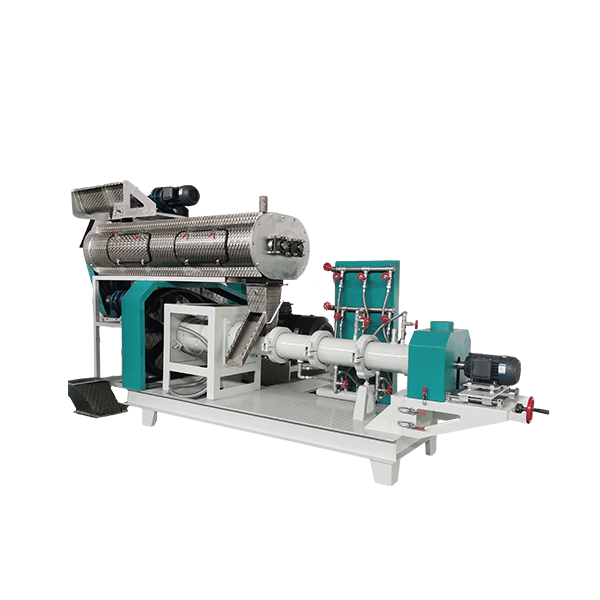
Why DSP120‑B
Steam conditioning before the barrel increases gelatinization, reduces fines and improves pellet durability for aquafeed and high‑end livestock feed.
[Single/Double‑shaft] with adjustable paddles for [60–180 s] retention.
Saturated steam [0.2–0.4 MPa]; moisture addition [2–6%] typical.
Better starch cook → durable pellets and lower dust.
Optimized die + knife keep ends neat and uniform length.
Floating/sinking aquafeed or premium pet foods with die kits.
Interlocks, E‑stops; access doors for easy clean‑in‑place.
Performance & Utilities
[800–2,500 kg/h], depending on recipe, die and steam.
[75–132 kW] AC; VFD recommended for load control.
0.8–12 mm round; optional shapes available.
[— kg/h] @ [0.2–0.4 MPa]; condensate return supported.
Retention [60–180 s]; target barrel [120–170°C] by recipe.
Stainless contact parts option; wear‑resistant screw & liner.
Configuration Options
[Single/Double‑shaft], variable paddle angle, steam & liquid injectors.
Quick‑change die plates 0.8–12 mm; adjustable knife speed for length.
Screw feeder with VFD; PID control for steam & moisture.
Hygiene & Safety
Interlocks, overload, E‑stops; temp & current monitoring.
Smooth surfaces; access doors; optional stainless upgrades.
Clean discharge; aspiration and magnet interfaces available.
Technical Specifications
Replace bracketed values with your exact data.
| Model | Screw Ø | Pre‑Conditioner | Pellet Ø | Capacity | Main Motor | Steam | Dimensions | Weight |
|---|---|---|---|---|---|---|---|---|
| DSP120‑B | Ø120 mm | [Single/Double‑shaft] | 0.8–12 mm | [800–2,500 kg/h] | [75–132 kW] | [0.2–0.4 MPa, — kg/h] | [— × — × — mm] | [— kg] |
Options: stainless contact parts, extra die set, VFDs, conditioner upgrades, magnet, aspiration port.
Typical Process Flow
Uniform mash with target moisture & fat content.
Steam & liquids added in pre‑conditioner for gelatinization.
Shear + heat create shape and density.
Knife speed sets pellet length; clean discharge.
Stabilize moisture; improve shelf life.
Oil/flavor coating (optional), then packing.
Case Snapshots
Recent configurations supplied. Results vary by formulation and operation.
- Double‑shaft conditioner
- Floating 1.0–3.0 mm pellets
- PDI improvement vs. dry type
- Fine die 0.8–1.2 mm
- Low fines, uniform length
- Compact line layout
- Multiple die plates
- Quick size change
- Neat edges, high density
Request a Custom Quote
Tell us your recipe, target capacity and pellet size. We’ll size DSP120‑B for you.
Error: Contact form not found.